Sep 12, 2026Procurement Guides
X65 Seamless Steel Pipe: Performance and Procurement Guide
X65 is an API 5L high-strength line pipe grade with a minimum yield strength of 448 MPa, used for long-distance oil and gas transmission.
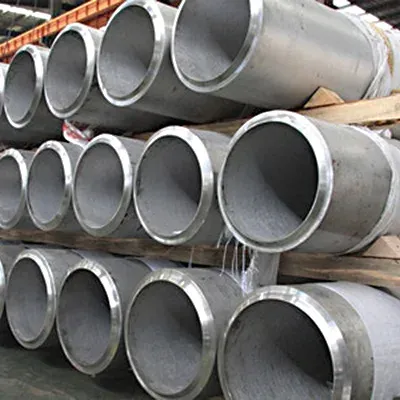
Quick answer: X65 is a high-strength pipeline steel grade in the API 5L standard with a minimum yield strength of 448 MPa. It is widely specified for long-distance oil and gas transmission because it combines high strength with good toughness, resistance to corrosive media such as H2S and CO2, and weldability with a controlled carbon equivalent. When you buy X65 seamless pipe, verify the API 5L and ISO 3183 marks, the physical and chemical test report, dimensional tolerance, non-destructive testing results and the anti-corrosion coating.
What Is X65 Seamless Steel Pipe
X65 belongs to the high-strength pipeline steel grades of the API 5L standard, with a minimum yield strength of 448 MPa. In oil and gas transportation it is valued for its performance under pressure and for the balance of strength and toughness that allows efficient, safe transmission over long distances. Seamless construction removes the longitudinal weld seam, which is why it is often chosen for demanding high-pressure service.
Three Core Performance Advantages
First, mechanical properties. Through microalloying design and controlled rolling and cooling, X65 achieves a balance between high strength and good toughness. Second, corrosion resistance. Its chemical composition is designed to resist attack by corrosive media such as H2S and CO2, which matters in sour and wet service. Third, weldability. The carbon equivalent is commonly controlled below 0.45 percent, which makes on-site construction and welding more manageable. Together these properties allow the pipe to withstand high-pressure transmission environments and suit long-distance oil and gas pipelines.
How X65 Seamless Pipe Is Produced
Modern X65 seamless pipe is mainly produced by hot rolling, including steelmaking, continuous casting, piercing, rolling and sizing. The steelmaking route typically uses a three-step sequence of converter smelting plus LF refining plus RH vacuum treatment to reach high cleanliness, commonly with phosphorus at or below 0.015 percent and sulfur at or below 0.003 percent. During hot rolling, thermomechanical controlled processing, or TMCP, forms a fine acicular ferrite structure under controlled rolling and cooling, which is important for achieving the required strength and toughness.
Typical Applications of X65 Seamless Pipe
In energy transmission, three scenarios are common. First, long-distance onshore pipelines such as natural gas projects, where X65 line pipe can work at pressures up to about 12 MPa and diameters up to about 1422 mm. Second, offshore oil and gas development, where pipe is used in subsea gathering and pipeline systems and must resist both external pressure and seawater corrosion. Third, urban gas network renewal, where X65 pipe is used to replace older, lower-grade line pipe such as X52 to raise transmission pressure and improve safety. Industry reports have pointed to strong growth in the use of X65 in pipeline construction in recent years.
X65 Seamless Pipe Procurement Checklist
When purchasing X65 seamless steel pipe, check five points. One, certification: verify the API 5L certification mark and ISO 3183 certification. Two, physical and chemical performance report: pay particular attention to Charpy impact energy at minus 20C, which is commonly required to reach 60 J or higher. Three, dimensional tolerance: the outer diameter deviation should typically be controlled within plus or minus 0.75 percent of diameter. Four, non-destructive testing reports, including ultrasonic testing and eddy current testing results. Five, anti-corrosion coating: a common 3PE coating thickness is 2.5 to 3.7 mm. Reputable suppliers commonly provide third-party inspection reports and support customized production.
Storage, Welding and Maintenance
In practical engineering use, three points matter. During storage, use supports to prevent deformation and keep stacking height within about five layers. Before welding, preheat to around 100C and use low-hydrogen electrodes. During operation, intelligent monitoring can track stress and strain in real time using fibre optic sensors. For pipelines that have been in service for more than about ten years, magnetic flux leakage inspection is commonly used for integrity assessment, and composite repair can be applied where needed.
Industry Trends
With decarbonization targets driving change, X65 pipe is developing in three directions. First, greener production using electric furnace short-process technology to cut carbon emissions. Second, smarter manufacturing, with full-process quality traceability through digital twin technology. Third, higher performance, with newer grades such as X65Q targeting improved low-temperature toughness at minus 45C. The growth of hydrogen pipeline technology is also creating demand for hydrogen-resistant X65 pipe, and some makers are developing stainless-lined composite pipe.
For line pipe, the certificate is only the start. Strength, toughness, tolerance and coating must all match the design pressure and the environment the pipeline will actually see.
How SPAI STEEL Supports Line Pipe Projects
SPAI STEEL, operated by Hunan Spai Pipe Industry Co., Ltd under SP Group, has served pipe buyers since 1996 and exports to more than 100 countries. The company supplies seamless pipe, ERW pipe, LSAW and SSAW pipe, fittings and flanges, structural sections and alloy pipe, working to GB, API, ASTM, ASME/ANSI, BS, DIN, JIS and GOST. Carbon steel production is based in Tianjin Jinghai and stainless and alloy production in Wenzhou Longwan. Third-party inspection by SGS, BV, TUV or TUBOSCOPE can be arranged.
FAQ
What is the minimum yield strength of X65 pipe?
X65 has a minimum yield strength of 448 MPa under the API 5L standard.
Why is X65 used for long-distance pipelines?
It combines high strength with good toughness, corrosion resistance and weldability, which allows high operating pressures and efficient transmission over long distances.
What should I check when buying X65 seamless pipe?
Verify the API 5L and ISO 3183 marks, review the physical and chemical test report including Charpy impact results, check outer diameter tolerance, review ultrasonic and eddy current test reports, and confirm the anti-corrosion coating.
Can X65 pipe be used for hydrogen service?
Hydrogen pipeline development is driving demand for hydrogen-resistant grades. Whether a standard X65 pipe is suitable depends on the project specification and the hydrogen service conditions, so this should be confirmed with the supplier and the design engineer.
Send your diameter, wall thickness, pressure class, coating and destination port to our engineering team for a confirmed X65 seamless pipe recommendation.