Sep 12, 2026Procurement Guides
What Is Alloy Steel Pipe and When Should You Specify It?
Alloy steel pipe is a hollow section made from alloy steel, used for high-pressure, high-temperature and structural service.
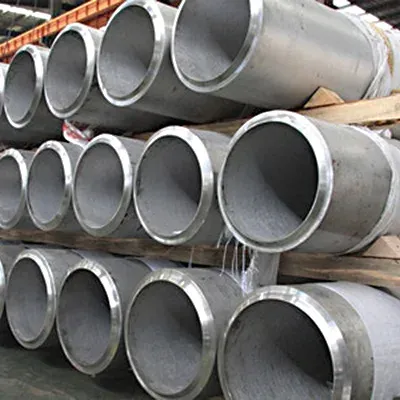
Quick answer: alloy steel pipe is a hollow steel section made from alloy steel, which contains alloying elements added beyond the ordinary carbon range to improve strength, toughness, creep resistance or corrosion resistance. It is commonly used for high-pressure and high-temperature lines and equipment such as power plant piping, high-pressure boilers, superheaters and reheaters, and for structural and mechanical parts such as drill pipe, drive shafts and frames. Compared with a solid round bar of the same weight, a hollow section carries bending load more efficiently and saves material.
What Makes a Pipe an Alloy Steel Pipe
An alloy steel pipe is produced from high-quality carbon steel, alloy structural steel or heat-resistant stainless steel. The alloying elements are added deliberately to reach properties plain carbon steel cannot provide, such as higher creep strength at temperature or better resistance to oxidation and corrosion. The result is a hollow section that can be used either to carry fluids or as a structural member.
How Alloy Steel Pipe Is Made
Alloy steel pipe is typically made by hot working, such as rolling, extrusion or expansion, or by cold working, such as cold rolling or cold drawing, depending on the size, wall thickness and required tolerance. Hot working suits heavier sections and higher temperatures, while cold working gives tighter dimensional control and a better surface finish for precision applications. Heat treatment is selected with the grade to develop the intended strength and toughness.
Where Alloy Steel Pipe Is Used
The main use of alloy steel pipe is in high-pressure and high-temperature pipelines and equipment. Typical examples include power plants, nuclear power plants, high-pressure boilers, high-temperature superheaters and reheaters. Because these services combine pressure, temperature and sometimes corrosive media, the alloy content and heat treatment are selected to keep strength and oxidation resistance stable over long operating periods. Alloy steel pipe is also used to move fluids and solid materials such as oil, natural gas and water, where the hollow section is chosen for its strength-to-weight efficiency.
Why Hollow Sections Are Efficient
For the same bending moment, a hollow alloy steel pipe develops a lower bending strength demand than a solid steel bar, which makes it an economical section steel. Using a hollow section for annular parts also improves material utilization, simplifies the manufacturing process, and saves both material and man hours. This is why rolling bearing rings and similar annular components are widely made from steel pipe.
Alloy Steel Pipe in Structural and Mechanical Parts
Beyond pipelines, alloy steel pipe is used to make structural and mechanical parts such as oil drill pipe, automobile transmission shafts, bicycle frames and steel scaffolds for construction. In these applications the design takes advantage of the stiffness and strength of the tube while keeping weight down, and the grade is selected to suit the load, the environment and the required fatigue life.
Alloy Steel Pipe and Sustainability
A major advantage of alloy steel pipe is that steel can be recycled, which supports environmental protection, energy conservation and resource conservation goals. Because the material can return to the melt and be reused, specifying steel pipe fits projects that must consider end-of-life recovery as well as in-service performance.
When Should You Specify Alloy Steel Pipe
Specify alloy steel pipe when the service combines pressure and temperature beyond the comfortable range of plain carbon steel, when creep strength or oxidation resistance is required, or when a structural or mechanical part needs high strength with efficient material use. Define the grade, the size and wall thickness, the heat treatment condition, the applicable standard and the inspection requirement on the enquiry so that the mill can confirm the correct product.
Choose the grade for the duty, not the other way round. Temperature, pressure, environment and life expectancy should drive the alloy selection.
How SPAI STEEL Supports Alloy Pipe Projects
SPAI STEEL, operated by Hunan Spai Pipe Industry Co., Ltd under SP Group, has served pipe buyers since 1996 and exports to more than 100 countries. The company produces carbon steel, stainless steel and alloy pipe, pipe fittings and flanges, structural sections and related products, working to GB, API, ASTM, ASME/ANSI, BS, DIN, JIS and GOST. Carbon steel is produced in Tianjin Jinghai and stainless and alloy products in Wenzhou Longwan. Third-party inspection by SGS, BV, TUV or TUBOSCOPE can be arranged.
FAQ
What is the difference between alloy steel pipe and carbon steel pipe?
Alloy steel pipe contains deliberate alloying elements, such as chromium, molybdenum or nickel, that improve properties such as creep strength, toughness or corrosion resistance. Carbon steel pipe relies mainly on carbon and manganese, is more economical, and is normally limited to lower temperatures.
Is alloy steel pipe seamless or welded?
It can be either. Seamless alloy pipe is common for high-pressure and high-temperature service, while welded construction is used where the duty and specification allow it. The required process should be stated on the enquiry.
What industries use alloy steel pipe?
Typical users include power generation, nuclear power, boiler and heat exchanger manufacturing, oil and gas, petrochemical processing, and general mechanical and structural fabrication.
Can alloy steel pipe be recycled?
Yes. Steel is recyclable, so alloy steel pipe can be recovered and reused at end of life, which supports energy and resource conservation goals.
Send your grade, size, pressure and temperature duty to our engineering team for a confirmed alloy steel pipe recommendation.