Sep 12, 2026Procurement Guides
Steel Pipe Dimensions and Sizes Chart: What Schedule 40 and 80 Mean
Pipe size is more than diameter. Learn how ASME B36.10M and B36.19M define OD and wall thickness, and what Schedule 40 and 80 actually mean.
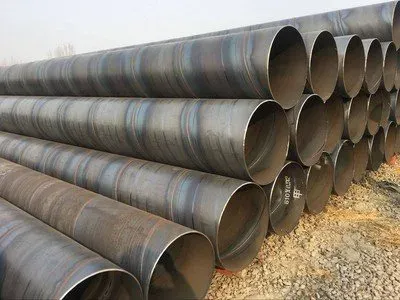
Quick answer: Schedule 40 and Schedule 80 are wall thickness series, not fixed thicknesses. In the same nominal pipe size, Schedule 80 has a thicker wall than Schedule 40, so it withstands higher pressure. A complete pipe size gives outer diameter, wall thickness and length.
What a Pipe Size Actually Includes
A complete description of pipe size includes the outer diameter (OD), the wall thickness (WT) and the length, usually 20 feet (6 metres) or 40 feet (12 metres). From these three values a buyer can calculate the weight of the line, the pressure it can withstand, and the cost per foot or per metre. Confirming them in writing avoids the common problem of ordering the wrong size after a misunderstanding.
The Two Dimensional Standards
Two standards govern pipe dimensions. ASME B36.10M covers carbon steel and alloy pipe, both seamless and welded, for high or low temperature and pressure service. ASME B36.19M covers stainless steel pipe in the same seamless and welded types and is largely the same, with a few differences. For NPS 14 to NPS 22 (DN 350 to DN 550) it uses schedule 10S; NPS 12 uses Schedule 40S; and NPS 10 and 12 use Schedule 80S. The letter S marks the stainless wall thicknesses that differ from B36.10M.
Why Small Pipe Has an OD Different from Its Nominal Size
All pipe is identified by nominal pipe size, NPS. For NPS 1/8 (DN 6) up to NPS 12 (DN 300), sizes are based on a standard outside diameter that was originally selected to specify pipe dimensions. Because a pipe also has a wall thickness and an internal diameter, small pipe shows a clear difference between OD and ID. As sizes grow, OD and ID become approximately equal. There is no fixed relation between the old outside-diameter standard and the nominal size, so both values are accepted in ASME B36.10M. In this standard, pipe with an outside diameter smaller than 12.75 in (NPS 12, DN 300) has an actual diameter larger than its NPS or DN. Tube dimensions behave differently: the actual outside diameter equals the tube number for all sizes.
What Pipe Schedule Means
Pipe schedule is a way of indicating wall thickness, defined in ASME B36.10 and used in many other standards, and it is marked Sch. The schedule is not a single wall thickness but a wall thickness series: the same schedule gives different wall thicknesses at different diameters. Schedule numbers in common use include SCH 5, 5S, 10, 10S, 20, 20S, 30, 40, 40S, 60, 80, 80S, 100, 120, 140 and 160. The rule is simple: the larger the schedule number, the thicker the wall and the higher the pressure resistance.
The schedule number was historically linked to design pressure. The expression Sch = P / [s]t x 1000 relates the schedule to design pressure P in MPa and allowable stress [s]t of the material at design temperature in MPa. In practice, buyers select the schedule that meets the design pressure with a suitable margin.
Schedule 40 and Schedule 80 in Practice
Schedule 40 and Schedule 80 are the two wall thicknesses most often requested because they cover the pressures required in many industries. The material standard for these thicknesses is not limited. A buyer can order Schedule 40 stainless pipe such as ASTM A312 Grade 316L, or Schedule 40 or 80 carbon steel pipe to API 5L, ASTM A53, ASTM A106B, A179, A252 or A333.
Schedule 40 and Schedule 80 describe wall thickness series, so the same schedule number gives a different wall thickness at a different pipe diameter.
NPS, DN and Weight Class
Nominal Pipe Size (NPS) is a North American set of standard sizes for pipe used at high or low pressure and temperature. Pipe size is given with two non-dimensional numbers: the NPS in inches and the schedule. Nominal Diameter, or DN, is the general diameter shared by pipe and pipeline accessories; because nominal diameter pipe and fittings interconnect, DN has interchangeability. DN is shown as a number followed by DN and the unit in millimetres, for example DN50. The exact conversion is 1 inch = 25.4 mm.
Weight class, or WGT, is an older wall thickness indication that is still used. It has only three grades: STD (standard), XS (extra strong) and XXS (double extra strong). Early pipe had one specification per size, the standard tube; XS then appeared for higher-pressure fluid, and XXS followed.
How to Describe a Pipe Size Correctly
Four forms are common. First, outside diameter x wall thickness, such as 88.9 mm x 5.49 mm (3-1/2 in x 0.216 in), with length 6 m (20 ft) or 12 m (40 ft), single random length of 18 to 25 ft, or double random length of 38 to 40 ft. Second, NPS x schedule, such as NPS 3 inch x Sch 40. Third, NPS x weight class, such as NPS 3 inch x SCH STD. Fourth, in North and South America, outside diameter x lb/ft is common, for example OD 3-1/2 in, 16.8 lb/ft.
FAQ
Is Schedule 80 thicker than Schedule 40?
Yes. For the same nominal pipe size, Schedule 80 has a thicker wall and higher pressure resistance than Schedule 40.
Is pipe schedule the same as wall thickness?
No. A schedule is a wall thickness series. The actual wall thickness for a given schedule changes with the pipe diameter.
What is the difference between NPS and DN?
NPS is the North American nominal size in inches. DN is the nominal diameter in millimetres. Both are nominal identifiers, not the exact outside diameter.
Which standard gives pipe dimensions?
ASME B36.10M gives dimensions for carbon and alloy steel pipe, and ASME B36.19M the stainless version with S-series wall thicknesses.
Send SPAI STEEL your required OD, wall thickness or schedule, length and material, and we will confirm the exact pipe size and documentation. SPAI STEEL supplies carbon, alloy and stainless pipe to GB, API, ASTM, ASME/ANSI, BS, DIN, JIS and GOST standards, with third-party inspection available on request.