Sep 13, 2026Applications & Projects
Steel Pipe and Flange: How They Work Together
How steel pipe and flange connections work, when threaded or welded flanges suit the line, and what to specify when ordering.
Quick answer: A flange is a disc-shaped part used in pairs to connect steel pipe, fittings and equipment. Two flanges are fixed to the pipe ends, a gasket is placed between them, and bolts clamp the assembly to complete a flanged connection. Threaded flanges suit lower-pressure, smaller-diameter lines, while welded flanges are used for higher pressures and larger diameters, with flange thickness and bolt size rising as the pressure rating increases.
What a Flange Actually Does
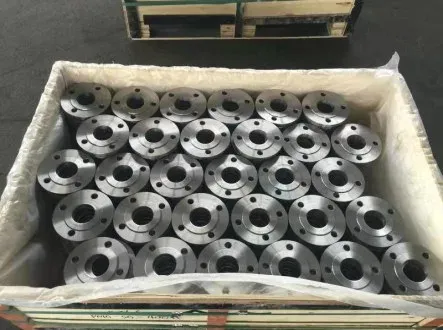
The flange is the most common connection component in pipeline engineering, and it is almost always used in pairs. In a line that needs to be connected, a flange plate is installed at each end by a suitable method. A low-pressure pipeline can use a threaded flange, while a welding flange is used for pressure above 4 kg. A sealing point, or gasket, is placed between the two flanges, and the pair is then tightened with bolts. Flanges for different pressures have different thicknesses and use different bolts.
The same idea covers equipment. When water pumps and valves are connected to pipelines, parts of that equipment are also made into matching flange shapes, which is called a flange connection. In general terms, all connecting parts that are bolted together on two planes and closed at the same time are called flanges, such as the connection of ventilation pipes. Smaller items such as valves can be described as flange parts, but the connection itself is only part of the equipment.
Threaded vs Welded Flange Connections
Flanges are divided into threaded, or screwed, flanges and welded flanges. Threaded flanges are used for low-pressure small-diameter lines, while welded flanges are used for higher pressures and larger diameters. For different pressures, the thickness of the flange and the diameter and number of connecting bolts all change. A flanged connection fixes two pipes, fittings or equipment each onto a flange, adds a gasket between the two flanges, and fastens the assembly with bolts. Some fittings and equipment have their own integral flanges, and these are also flanged connections.
Gaskets and Bolt Selection
Because the joint depends on the gasket, gasket material usually follows the pressure level, moving from soft sheet gaskets at low pressure to metal gaskets at high pressure. The bolts must match the flange drilling and the pressure class, and they must be tightened evenly so that the gasket is compressed uniformly. A single under-tightened or over-tightened bolt can create a leak path even when every component is individually correct.
Pressure Rating and Dimensions
Pressure class is the thread that links everything together. Flanges with different pressure ratings have different thicknesses and use different bolt diameters and counts, so a flange cannot be selected by nominal size alone. Once the pressure rating and the pipe outside diameter are fixed, the corresponding flange dimensions, facing and bolt set follow from the relevant standard.
Where Flanged Connections Are Used
Flanged connections are easy to use and can withstand higher pressures, which is why they are widely used in industrial piping. In a home the pipe diameter is small and the pressure is low, so flanged connections are rarely visible. In a boiler room or on a production site, however, flanged pipes and equipment can be found everywhere.
Ordering Pipe and Flange Together
When ordering, give the pipe outside diameter and wall thickness alongside the flange standard, pressure rating, facing type and material, so the pipe end and the flange bore are prepared for each other. Specify the gasket and bolt grade at the same time, because mixing pressure classes across pipe, flange, gasket and bolts is one of the most common causes of a leaking joint.
A flanged joint is only as good as the match between pipe, flange facing, gasket and bolt grade - the pressure rating must be consistent across all four.
FAQ
Why are flanges used in pairs?
A flange joint is formed by two mating flanges, one on each item to be connected. A gasket sits between them and bolts clamp the pair, so a single flange cannot complete a connection on its own.
When should a welded flange replace a threaded flange?
Threaded flanges are used for low-pressure small-diameter lines. Welded flanges are used for higher pressures and larger diameters, where the threaded joint would not provide enough strength or sealing reliability.
What decides flange thickness and bolt size?
The pressure rating. Flanges of different pressure classes have different thicknesses and different bolt diameters and counts, so the class must be known before dimensions are selected.
How is a flange connection sealed?
A gasket is placed between the two flanges and the assembly is tightened with bolts. Gasket material follows the pressure level, from soft sheet gaskets at low pressure to metal gaskets at high pressure.
Send your pipe sizes, flange standard and pressure rating to our engineering team for a confirmed recommendation.