Sep 12, 2026Procurement Guides
Stainless Steel Seamless vs Welded Pipe: How to Choose for Your Project
Seamless stainless pipe is drawn from a solid billet with no weld seam; welded pipe is formed from strip and joined at a seam. Compare pressure, length, cost and corrosion behaviour.
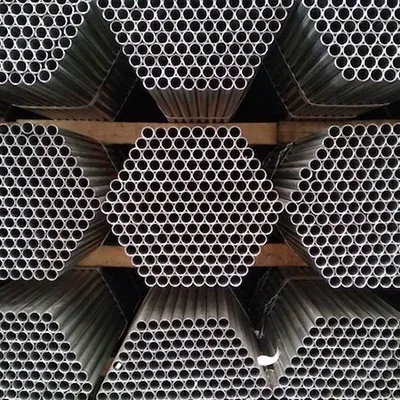
Quick answer: seamless stainless pipe is made by drawing a heated round billet into a hollow tube, so it has no weld seam and is normally preferred for high-pressure, high-temperature and critical service. Welded stainless pipe is formed by rolling flat strip into a cylinder and welding the longitudinal seam, which makes it the more economical choice for longer lengths and general service. The seam is the weaker point of a welded pipe, so grade, weld quality and testing - not the process name alone - decide whether a pipe suits your duty.
How Seamless Stainless Pipe Is Made
Seamless (or non-split) pipe starts as a round steel billet, which is heated and pierced to form a hollow shell. Because there is no joint, the wall is continuous around the circumference. Grades such as 304, 316 and 321 are common, and the process is widely used for high-temperature, boiler and heavy-duty industrial service.
How Welded Stainless Pipe Is Made
Welded stainless pipe begins with strip or coil of the correct gauge thickness. The strip is slit to the width that corresponds to the finished pipe size, then progressively curled through a series of rollers until the edges meet. The final longitudinal joint is welded. The weld seam is the weaker part of the pipe, but the process needs less capital equipment and produces longer lengths more economically.
The Practical Differences
Pressure and temperature: seamless pipe is the usual choice where the line runs at high pressure or high temperature, because there is no seam to become the limiting feature.
Length: seamless pipe is generally supplied in relatively shorter lengths than welded pipe, which can be produced in long lengths and therefore needs fewer field joints.
Corrosion behaviour: welded pipe is more prone to corrosion at the seam if the weld and heat-affected zone are not properly controlled, while seamless stainless pipe is less reactive to corrosive attack because the wall is uniform.
Cost: welded production requires less capital, so welded pipe is normally the lower-cost route; seamless pipe carries a premium that is justified by pressure and integrity requirements.
Choose the process that matches the duty - then verify grade, wall thickness and test certificates, because two pipes with the same outside diameter can behave very differently.
Which Should You Specify?
Specify seamless where the pipe carries high pressure or high temperature, where the consequence of a leak is serious, or where the project specification names seamless product. Specify welded where the duty is general service, the pressure window is moderate, and long uninterrupted lengths or lower cost matter most. In both cases the stainless grade, the wall thickness, and the inspection regime should be stated on the enquiry.
FAQ
Is welded pipe always weaker than seamless?
The weld seam is the weaker part of a welded pipe, which is why seamless product is preferred for the most demanding service. Well-made welded pipe with proper weld control remains fully suitable for its specified pressure window.
Can welded pipe be used at high temperature?
It can, provided the grade, weld procedure and specification allow it. Where the project demands seamless product, that requirement should be respected rather than substituted.
Does seamless pipe come in longer lengths?
Generally the opposite - seamless pipe is supplied in relatively shorter lengths than welded pipe, so a long line may need more field joints.
Send your grade, sizes, pressure duty and destination port to our engineering team for a confirmed recommendation.