Sep 12, 2026Procurement Guides
Slip-On vs Socket Welding Flange: Principles, Characteristics and Selection
How slip-on and socket welding flanges work, how they differ, and which one to specify for pressure, temperature and pipe size.
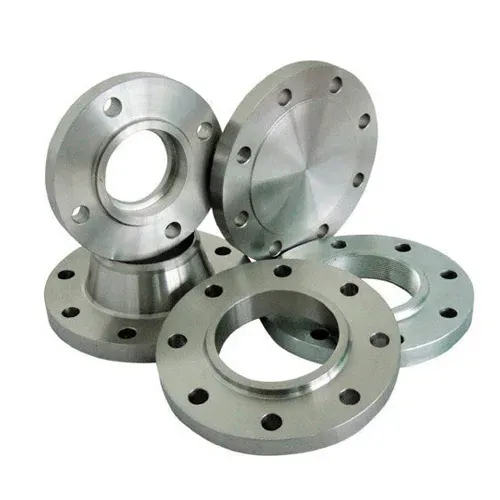
Quick answer: A slip-on flange slides over the pipe and is attached with fillet welds, giving a simple, economical joint for medium and low pressure service. A socket welding flange has a recessed socket into which the pipe is inserted and welded, and it is suited to small diameter, high pressure and high temperature lines.
What a Slip-On Flange Is
A slip-on welding flange is a flange connected to a vessel or pipeline through a fillet weld. In design, based on the integrity of the connection between the flange ring and the straight pipe section, flanges are divided into integral flanges and loose flanges, and flange rings are divided into those with a neck and those without.
Compared with a neck welding flange, a slip-on welding flange has a simpler structure and uses less material, but its stiffness and sealing performance are slightly inferior. Slip-on flanges are widely used for connecting medium and low pressure vessels and pipelines.
Design Characteristics and Weight Savings
The slip-on flange saves space and reduces weight, and it can ensure no leakage at the joint while providing reliable sealing performance. Because the sealing element is reduced in diameter, the cross-sectional area of the sealing surface also decreases, which allows a more compact flange size.
The flange gasket is replaced by a sealing ring to keep the sealing surfaces matched. That means only a small amount of pressure is needed to tighten the cover tightly. As the required pressure falls, the size and quantity of bolts can be reduced as well. Compact designs of this type are reported to be 70 to 80 percent lighter than traditional flanges, which is why they are attractive where weight matters.
How the Slip-On Flange Seals
Two sealing surfaces press the flange gasket to form a seal, but the same mechanism can also lead to seal failure. To maintain the seal, a larger bolt force is needed, which requires larger bolts. Larger bolts need larger nuts, which means larger diameter bolts are needed to tighten the nuts.
The larger the bolt diameter, the easier it is for the flange to bend, and this can be countered only by increasing the flange wall thickness. The whole assembly then becomes large and heavy, which is a particular problem offshore, where weight is always a primary consideration. Fundamentally, the sealing effect of the slip-on flange depends on bolt load: in the described arrangement, around 50 percent of the bolt load tightens the gasket and the remaining 50 percent maintains the pressure.
Slip-on flanges are the economical choice for medium and low pressure service, while socket welding flanges are the choice where small diameter lines run at high pressure and high temperature.
What a Socket Welding Flange Is
Socket welding flanges are suitable for connecting small diameter, high pressure and high temperature pipelines. They do not have a raised protrusion on the face; the groove is opened directly in the flange body, so the flange is machined with holes first and then slots, in a manner broadly similar to a blind flange.
Slip-on flanges, by contrast, have a protrusion similar to a butt welding flange, with a groove on the protrusion for the pipe to be inserted into and welded.
Slip-On vs Socket Welding: The Differences
The two designs differ in geometry and in the duty they suit. The slip-on flange uses a protruding face with a groove and accepts the pipe through the bore, which makes alignment easy and the weld accessible. The socket welding flange uses a recessed socket in the flange body, which holds the pipe end and gives a compact, high-integrity joint.
Weldability is also a point of comparison: the welding performance of slip-on (flat welding) flanges is described as slightly better than that of socket welding flanges, while socket welding is preferred where small diameter, high pressure and high temperature conditions combine.
How to Choose
Choose by pressure and temperature first, then by pipe size and the cost of the joint. Slip-on flanges suit medium and low pressure vessels and pipelines and are simple and economical to fit. Socket welding flanges suit small diameter lines at high pressure and high temperature, where a compact and robust joint is required. Confirm the flange standard, face type, pressure class and material before ordering.
FAQ
What is the main difference between slip-on and socket welding flanges?
A slip-on flange slides over the pipe and is fillet welded, while a socket welding flange has a recessed socket in the flange body into which the pipe is inserted and welded.
Which flange suits high pressure and high temperature?
Socket welding flanges are suitable for connecting small diameter, high pressure and high temperature pipelines.
Which flange is lighter?
Slip-on and compact flange designs reduce material and weight. Compact designs of this type are reported to be 70 to 80 percent lighter than traditional flanges.
Is slip-on flange weldability better?
The welding performance of slip-on, or flat welding, flanges is described as slightly better than that of socket welding flanges.
Send your standard, sizes and destination port to our engineering team for a confirmed recommendation.