Sep 12, 2026Procurement Guides
Butt Welding Fitting Manufacturing Processes Explained
Butt welding fittings such as elbows, tees, reducers and caps are formed by hot mandrel, cold squeeze, UO, hydraulic bulge and deep drawing methods.
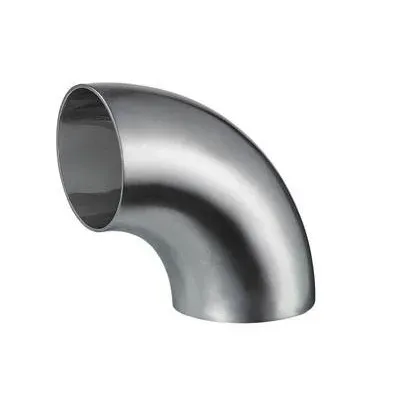
Quick answer: butt welding fittings are made by several distinct processes, and the method chosen depends on the fitting type, size, wall thickness and material. Elbows are commonly produced by hot mandrel forming, by cold squeezing, or by hydraulic bulging; tees are made by hydraulic bulging or hot extrusion; reducers are formed in an outer die or from plate using the UO method; caps are deep drawn from plate; and stub ends are produced by flaring or forging. Each process leaves a different surface finish, thickness distribution and weld arrangement, so the method should match the specification and the service.
Why the Manufacturing Method Matters
A butt welding fitting must match the pipe it joins in bore, wall thickness and material, and it must carry the same pressure and temperature duty. The forming method affects wall thickness distribution, curvature radius, surface finish and the number and location of welds. Understanding the main processes helps buyers judge whether a quotation will deliver the fitting the project actually needs.
Hot Mandrel Forming for Elbows
Mandrel forming, also called hot forming, is one of the most common ways to make pipeline elbows. The raw material is heated and then pushed through a die, often described as a mandrel axis, which lets the pipe expand and bend at the same time. The method suits a wide range of sizes. The character of the bend depends largely on the shape and size of the mandrel. Elbows made by hot mandrel bending commonly offer good thickness uniformity and a shorter curvature radius than other bending methods.
Cold Forming: Squeezing and the UO Method
In the cold squeezing method, pipe of the same diameter as the finished part is pushed through a die and formed into the required shape. It is usually suitable for small and medium stainless steel elbows. The UO method starts from plate rather than pipe: the plate is cut to a specially designed shape, formed into a U shape with one die, and then formed into an O shape or tube with another. Once the fitting has the required shape, it is welded from the closed joint both inside and outside.
Hydraulic Bulging and Hot Extrusion for Tees
Hydraulic bulge forming is a cold forming method that produces a good surface finish. Cut pipe is placed in a hydraulic die and liquid is injected into the pipe; hydraulic pressure expands the material into the fixed openings of the die. This method is not normally used for very thick sections. For special materials, large diameters, thick walls, or sizes that cannot be made by hydraulic bulging, a hot extrusion method is used. In hot extrusion, pipe close to the finished diameter is used and the outlet is formed with the help of squeezing. Valve bodies and other sizes can also be adjusted by stamping dies if required.
Forming Reducers, Caps and Stub Ends
One of the most common ways to make reducers is with an outer die. The pipe is cut and pressed in the die, compressing one end to a smaller size, which is useful for small and medium reducers. Reducers can also be made from plate. In the UO method, the plate is cut to a designed shape, formed into a U and then an O, and finished with a single weld seam. Caps are manufactured by deep drawing, in which a plate is cut into a circle and formed in a deep drawing die. Stub ends, or lap joint flanges, are made by the flaring method, where the pipe end is flared or spread out to form the flange face. Stub ends can also be made by forging, in which a forged block is machined to the final dimension.
The fitting and the pipe must behave as one system. Forming method, wall thickness and weld quality decide whether a fitting is a match or a weak point.
Matching the Process to the Specification
When you specify butt welding fittings, state the fitting type, the size, the schedule or wall thickness, the material, the applicable standard and the required inspection. Confirm whether the fitting will be seamless, welded from plate, or forged, because the process determines the weld configuration and the thickness distribution. Dimensional checks, material certificates and non-destructive testing should be agreed before production.
How SPAI STEEL Supports Fitting Projects
SPAI STEEL, operated by Hunan Spai Pipe Industry Co., Ltd under SP Group, has served buyers since 1996 and exports to more than 100 countries. The company supplies butt welding fittings and flanges alongside seamless pipe, ERW pipe, LSAW and SSAW pipe, structural sections and stainless and alloy pipe, working to GB, API, ASTM, ASME/ANSI, BS, DIN, JIS and GOST. Third-party inspection by SGS, BV, TUV or TUBOSCOPE can be arranged.
FAQ
What is the most common way to make butt welding elbows?
Hot mandrel forming is one of the most common methods. It suits a wide size range and commonly gives good thickness uniformity and a tighter curvature radius.
How are butt welding tees made?
Tees are commonly made by hydraulic bulging for standard sizes. For large diameter, thick wall or hard-to-form materials, a hot extrusion method is used instead.
How are caps and stub ends manufactured?
Caps are deep drawn from circular plate. Stub ends are made by flaring the pipe end to form the flange face, or by forging and machining a forged block to final dimension.
Does the manufacturing method affect price and quality?
Yes. Different processes produce different surface finish, wall thickness distribution and weld arrangements. The method should match the fitting type, size, material and service, and should be confirmed before production.
Send your fitting type, size, schedule, material and standard to our engineering team for a confirmed butt welding fitting recommendation.