Sep 12, 2026Procurement Guides
ASTM A106 Grade B Seamless Pipe: Composition, Service and Ordering Checks
ASTM A106 Grade B is the seamless carbon steel pipe specified for high-temperature service. Understand what the grade covers and what to confirm before you order.
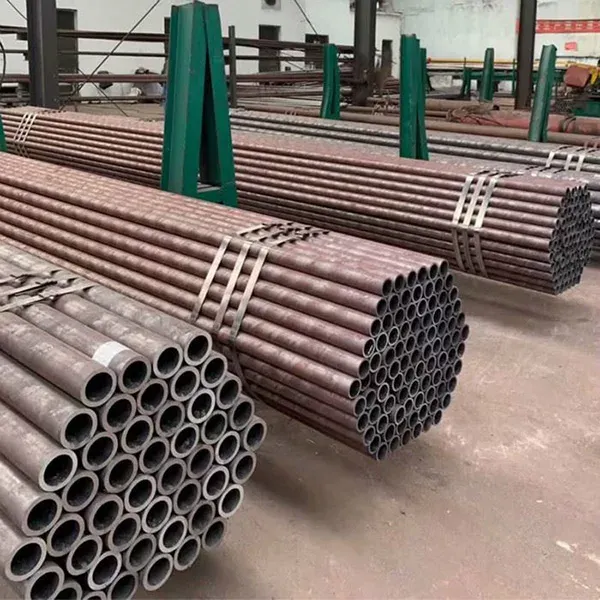
Quick answer: ASTM A106 is the standard specification for seamless carbon steel pipe for high-temperature service, and Grade B is its most widely used grade. It is specified where elevated-temperature strength matters, and it is supplied as seamless pipe. Compared with a general-service grade such as A53-B, A106-B carries tighter chemistry control - including a minimum silicon content and lower sulfur and phosphorus limits - which supports its high-temperature use.
What ASTM A106 Covers
ASTM A106 applies to seamless carbon steel pipe intended for high-temperature service, and the grades within it are distinguished by their strength level. Grade B sits in the middle of the range and is the grade most often ordered for boiler, process and high-temperature piping.
Composition Differences That Matter
Comparing A106-B with A53-B seamless pipe shows the chemistry that supports high-temperature service:
1. Silicon. A106-B contains a minimum silicon content, while A53-B does not. Silicon is an important element for improving heat-resistance criteria, which is one reason A106 is specified for hotter duty.
2. Manganese. A106-B specifies manganese of roughly 0.29-1.06%, whereas A53-B runs to about 1.2%.
3. Sulfur and phosphorus. A106-B holds low sulfur and phosphorus at a maximum of about 0.035%, compared with approximately 0.05 and 0.045% respectively for A53-B.
A106-B is not just a label on a certificate - the tighter chemistry is what allows the pipe to be relied on at temperature.
Where A106 Grade B Is Used
Because the specification is written for high-temperature service, A106-B is associated with boiler and process piping rather than with general low-temperature duties. Where the pipe will see elevated temperature, it is the usual starting point; where the duty is ordinary and the temperature is modest, a general-service grade may be sufficient.
What to Confirm Before Ordering
Confirm four items. First, the exact standard and grade - A106 Grade B, not just A106. Second, the size, wall thickness and length. Third, the inspection and test certificate package the project requires, since a high-temperature application usually demands documented chemistry and mechanical results. Fourth, whether any customer specification applies alongside the ASTM grade, because that specification may tighten the limits further.
FAQ
Is A106 always seamless?
A106 is written for seamless carbon steel pipe, so it is supplied as seamless product.
Why does A106-B specify silicon while A53-B does not?
Silicon improves heat-resistance performance, which is central to the high-temperature service A106 is written for.
Can A106-B be used for general piping?
It can, but it is normally specified where high-temperature service justifies the tighter chemistry. For ordinary duties a general-service grade is often more economical.
What should be on the purchase order?
The standard and grade, size and wall thickness, length, end preparation, and the inspection and certificate package. Quote any customer specification alongside the ASTM standard.
Send your ASTM grade, sizes, temperature duty and destination port to our engineering team for a confirmed recommendation.