Sep 13, 2026Grades & Materials
16Mo3 Alloy Steel Pipe: Performance Characteristics and Applications
16Mo3 alloy steel pipe guide: elevated-temperature strength, oxidation resistance, weldability and use in boilers, vessels and heat exchangers.
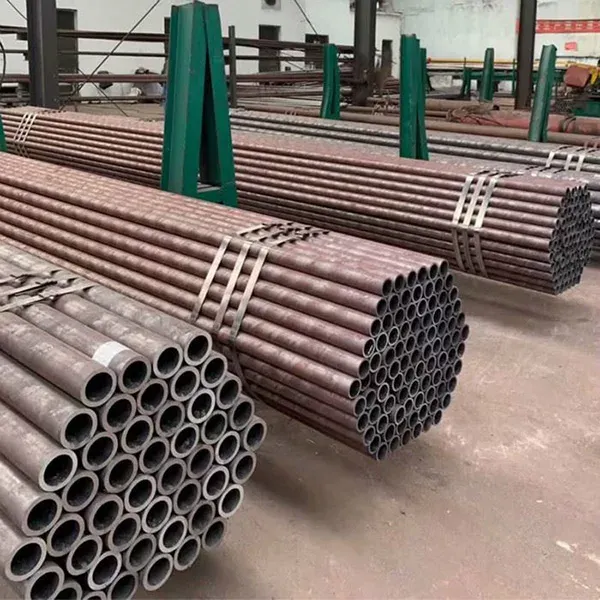
Quick answer: 16Mo3 is a molybdenum-alloy steel pipe used for elevated-temperature service. It keeps useful strength and toughness when hot, resists oxidation, and is easy to cut and weld, which makes it a common choice for boiler tubing, pressure vessels and heat exchangers.
What is 16Mo3 alloy steel pipe?
16Mo3 is an alloy steel grade in which molybdenum is the main alloying addition. The designation reflects the carbon and molybdenum content of the grade. The molybdenum addition supports elevated-temperature strength and resistance to oxidation, which is why 16Mo3 is grouped with steels intended for high-temperature, high-pressure duty. It is supplied as seamless or welded pipe depending on the application and the governing project standard.
What are the performance characteristics?
16Mo3 pipe is chosen for three main reasons. It retains useful strength and toughness at elevated temperature, so it is commonly used for high-temperature and high-pressure vessels and boiler lines. It shows good resistance to oxidizing media and can remain stable in corrosive service. It also has good processing performance: it is readily cut and welded and can be formed into components with complex shapes. Suppliers should confirm the exact heat treatment and mechanical properties against the governing specification.
16Mo3 is a workhorse elevated-temperature alloy, specified when carbon steel lacks the necessary hot strength but a higher-alloy stainless grade is not required.
Where is 16Mo3 pipe used?
Boiler piping is the best-known application, including heating surfaces, superheaters and steam lines that must withstand high temperature and pressure. In the chemical industry, 16Mo3 is commonly used for reactors, heat exchangers and similar equipment. In oil and gas, its combination of elevated-temperature strength and oxidation resistance suits demanding production and transport conditions. In each case the grade, wall thickness and heat treatment should be matched to the design condition.
What should buyers check?
Buyers should confirm the governing standard and grade, since 16Mo3 is covered by European specifications and equivalent grades may be requested for other markets. The outside diameter, wall thickness, length and quantity should be stated, along with any impact test, hardness or documentation requirement. Mill certificates and third-party inspection can be arranged so that the delivered pipe matches the design specification, and the production route should be agreed where the service is cyclic or at the top of the temperature range.
How does 16Mo3 fit with other elevated-temperature grades?
16Mo3 sits between plain carbon steel and higher-alloy grades in the elevated-temperature range. Carbon steel is the economical choice at lower temperatures, while chromium-molybdenum grades such as ASTM A335 P11, P22 and P91 are used as temperature and pressure rise. The right choice for a given project depends on the design metal temperature, the design pressure, the allowable stress at temperature and the corrosion duty. Buyers should not substitute one grade for another on the basis of size alone, because allowable stress and oxidation resistance differ, and the governing code may limit the use of each grade at a given temperature.
FAQ
What is 16Mo3 used for?
It is used mainly for elevated-temperature service such as boiler tubing, superheaters, steam lines, pressure vessels and heat exchangers.
Is 16Mo3 seamless or welded?
16Mo3 is available as seamless and welded pipe. Seamless is commonly chosen for high-pressure and high-temperature service, while welded pipe is used where the design allows.
How does 16Mo3 compare with carbon steel?
The molybdenum addition gives 16Mo3 better elevated-temperature strength and oxidation resistance than plain carbon steel, so it is selected when service temperature or pressure exceeds the practical range of carbon steel.
What information should a buyer provide?
Provide the standard and grade, outside diameter, wall thickness, length, quantity, design temperature and pressure, and any test or certificate requirements.
For a 16Mo3 pipe requirement, send the standard, sizes, quantity and design conditions to the SPAI STEEL sales team for a quotation.